Paladins Battlegrounds: Hi-Rez Explains Naming Choice Amid PUBG Comparisons
Paladins: Battlegrounds, Hi-Rez Studios' innovative battle royale mode, distinguishes itself from PUBG with unique MMO-inspired gameplay and legal clarity.
When Hi-Rez Studios announced Paladins: Battlegrounds, a new battle royale mode for their hero shooter, the internet immediately lit up with comparisons to the genre-defining giant, PlayerUnknown's Battlegrounds (PUBG). The similarity in naming was too conspicuous to ignore, leading many to wonder if this was a calculated move or an innocent coincidence. In an exclusive conversation, Hi-Rez President Stew Chisam addressed the elephant in the room head-on, providing a detailed rationale that delves into MMO inspirations, legal consultations, and the very nature of generic gaming terminology.
Chisam was quick to clarify that the naming choice for Paladins: Battlegrounds was not inspired by PUBG or other contemporary battle royale titles. In fact, the studio had considered and rejected the more straightforward "Paladins: Battle Royale." The decision, he explained, was rooted in the mode's core mechanics and feel. "Given that the game is team based and has a heavy reliance on high-speed mounts for transportation," Chisam stated, "the game felt more akin to the standard battleground someone would see in an MMO." This framing shifts the perspective from a last-man-standing free-for-all to a more structured, team-oriented warzone reminiscent of large-scale PvP areas in games like World of Warcraft. The term "Battlegrounds," in Hi-Rez's view, was a homage to that legacy rather than a nod to the current battle royale craze.
The Legal Grounds and Generic Terminology 🔍
The core of Hi-Rez's argument rests on a legal and semantic distinction. Chisam firmly believes "Battlegrounds" is a generic term—common parlance in gaming that cannot be trademarked on its own. He emphasized that the term is applied only to a specific game mode within Paladins: Champions of the Realm, not as the title of a standalone product. This is a crucial difference. To back their play, the studio's legal team was consulted before the announcement. "They gave them an all clear," confirming that using "Battlegrounds" in this context was permissible. Furthermore, Chisam pointed out that this new mode is actually an evolution of a previously scrapped concept that already existed within Paladins, suggesting internal continuity rather than external imitation.
The PUBG Precedent and Fortnite Drama ⚖️
This situation inevitably draws parallels to previous industry clashes, most notably PUBG Corp.'s reaction to Fortnite Battle Royale. When Epic Games launched their wildly popular mode, PUBG Corp. initially expressed strong objections, suggesting Fortnite had lifted their "signature gameplay." However, they later clarified their grievance was more specific: it pertained to Epic's use of technology, UI, and ideas while PUBG Corp. was licensing Epic's Unreal Engine. This nuance is important. It shows that while developers are protective of their creations, the legal battles often focus on specific implementations and contracts, not broad genre concepts or common words.
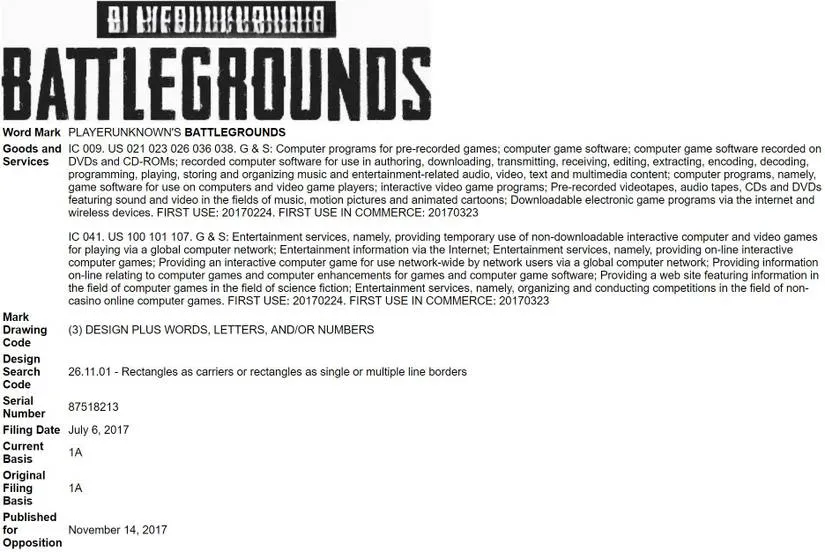
A key fact remains: neither PUBG Corp. nor Hi-Rez holds a trademark for the standalone word "Battlegrounds." PUBG Corp.'s parent company, Bluehole Inc., does hold a trademark for the full title "PlayerUnknown's Battlegrounds." The unresolved question is how far that trademark's protection extends. Would it cover any game mode using "Battlegrounds"? Legal experts suggest that's a steep uphill battle, as courts are reluctant to grant ownership over common descriptive terms. The trademark filing document itself highlights the specific, stylized nature of their claim.
What This Means for Gamers in 2026 🎮
Fast forward to the present day in 2026, and the gaming landscape has only become more saturated with battle royale and large-scale PvP modes. The Paladins: Battlegrounds controversy of its launch period now serves as a fascinating case study in genre evolution and naming conventions. It underscored several key points for the industry:
-
Genre Fluidity: Game modes constantly borrow and blend ideas from different genres. What feels like a battle royale to one player might feel like an MMO battleground to another.
-
The Power of a Name: While "Battlegrounds" may be generic, its association with PUBG was (and still is) incredibly strong. Choosing it guaranteed immediate recognition and discussion, for better or worse.
-
Legal vs. Cultural Ownership: A term can be legally generic but culturally owned by a pioneering title. Navigating that perception is a challenge for any follower in a popular genre.
The mode itself launched as a free-to-play addition to Paladins, which has continued to evolve on PC, PlayStation, and Xbox platforms. While its specific release date is now ancient history, the discussions it sparked about inspiration, homage, and originality in game design remain highly relevant. As new studios continue to enter competitive genres, the lessons from Paladins: Battlegrounds—clear communication, legal due diligence, and understanding player perception—are more important than ever. In the end, Hi-Rez staked their claim on a word they saw as descriptive of their game's fantasy team combat, firmly planting their flag in a linguistic and conceptual battleground that was far bigger than any single title.