My Unforgettable 2019 FaceIT PUBG Global Summit in London
A veteran recalls the fierce battles and camaraderie of the FaceIT Global Summit: PUBG Classic, a turning point in competitive gaming.
Seven years have passed, yet the memory still rears up like a heat haze on a summer road, shimmering and almost too vivid to touch. I was twenty-three then, one of the youngest in our squad, clutching a passport and a dream that felt heavier than my entire backpack. The destination was London, the reason the FaceIT Global Summit: PUBG Classic, and the adventure that followed would come to rewrite everything I thought I knew about competitive gaming.
We had clawed our way there through the FaceIT PUBG Showdown, those three grueling months of online qualifiers that started in February 2019. Each month the top two teams earned a direct invitation to the Summit, and when our name dropped on the final leaderboard at the end of March, my heart didn't just beat—it rang out like a bell heard through a fog, low and resonant, pulling every ounce of my life toward this single, impossible moment.
I'll never forget stepping into ExCeL London on April 16th. The hall was already alive, a massive acoustic honeycomb where thousands of individual voices combined into a single, sweet roar. It wasn't just noise; it was the sound of 24 teams from every corner of the world—North America, Europe, Korea, China, Japan, Southeast Asia, Latin America, Oceania—melting into one electric current. Fans held signs in languages I couldn't read, but the emotion behind them needed no translation. I remember thinking: this is what a global community looks like when it breathes together.
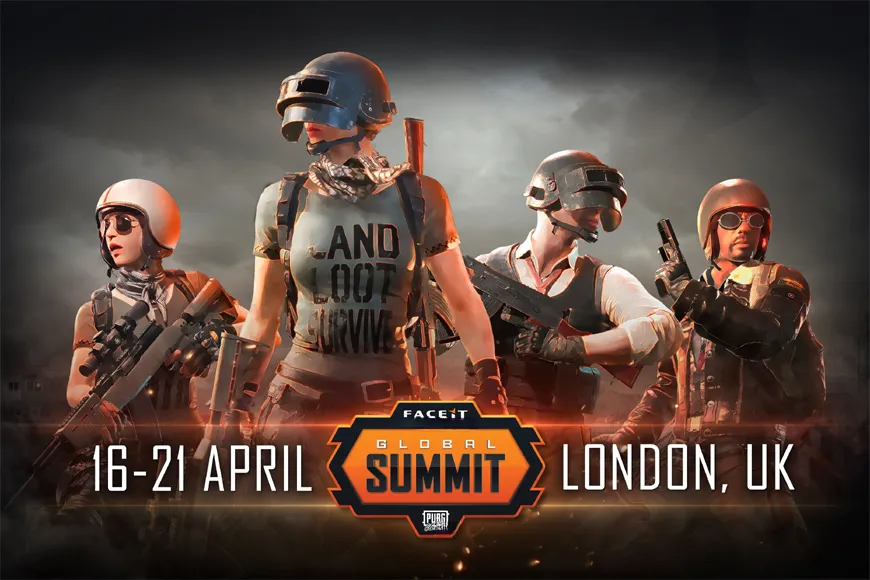
The multi-stage tournament stretched over six days, a marathon of nerves and precision. Inside those soundproof booths, everything outside became a distant hum. Our comms turned into a flock of starlings dancing in murmuration—each callout a rapid swoop, each rotation a perfectly timed curve, the whole squad moving as one organism rather than four separate minds. It's the kind of synergy that only months of shared suffering and cheap noodles can forge. When it works, you feel bulletproof. When it doesn't, the silence between games stretches like a rubber band pulled just before the snap.
One moment still glows in my memory like a flareshot over a dark compound. We were pinned in a bad position on Miramar, the circle closing with sadistic precision. Our IGL, a man who usually spoke in clipped coordinates, suddenly whispered, "We don't die here. Not today." That sentence became our raft. We rotated through what felt like an ocean of crossfire, stealing a compound by the skin of our teeth, and outlasted ten other squads to steal a second-place finish in that round. It wasn't the win, but it was proof—proof that the FaceIT platform had done its job, that the months of grinding on the integrated PUBG client had sharpened us into a blade that could cut through any lobby.
Behind all this glory lay a quiet revolution that PUBG Corporation and FaceIT had set in motion. That same year, PUBG announced a 25% revenue share from esports-specific in-game items going directly to teams. For squads like mine, it meant the difference between being a weekend warrior and a full-time professional. Suddenly, we could afford better analysts, more scrim blocks, and the mental space to treat this not as a hobby but as a craft. Michele Attisani, FaceIT's co-founder, later said that building an esports ecosystem was “no mean feat,” but standing there on the ExCeL stage, I could feel the scaffolding of that ecosystem holding us all up. Jake Sin, PUBG's global esports manager, called it a “new chapter,” and for once that corporate phrase rang completely true.
The showmatch between the Showdown winners added an extra layer of fire. Knowing that we were part of the first wave—the first to turn FaceIT's three-month online gauntlet into a LAN experience—made every bullet we fired feel heavier, more meaningful. We didn't lift the trophy that Saturday. That honor went to a Korean squad whose macro play was so clean it looked choreographed. But when the confetti fell, drenching us all in metallic rain, I understood that this wasn't just the end of Phase 1 of PUBG esports. It was the spark that lit something much bigger.
From my window in 2026, I can trace a straight line between that April in London and everything that followed. The FaceIT Global Summit crowned the first champion of the PUBG Classic series, but it also crowned a generation of players who finally saw a sustainable path ahead. We left the United Kingdom not just with a meager prize pool share, but with a roar still echoing in our ears—a roar that, even now, reminds me that the best stories in esports aren't only about the trophy. Sometimes they're about the honeycomb of voices, the dancing murmuration of a team in sync, and the rubber-band tension of a moment that could tear you apart but chooses, instead, to launch you forward.